THE HISTORY OF BMR
The foundations of a Quebec-based network
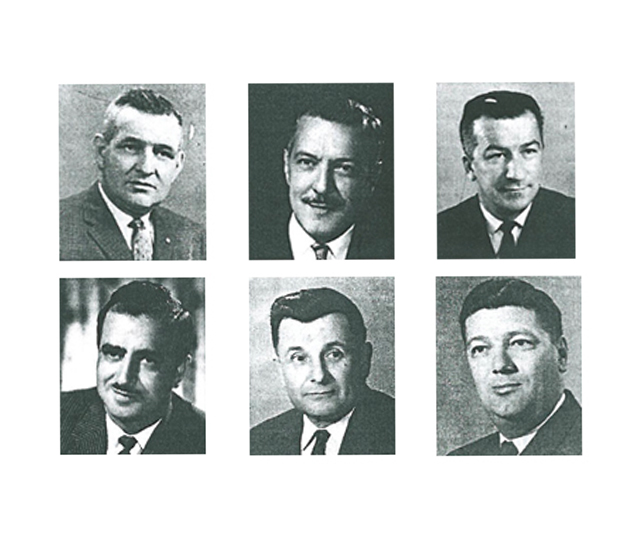
BMR was born in 1967 from the collective vision of six businessmen who, united under the name Union Six, decided to join forces to increase their purchasing power. Unbeknownst to them, this grouping had just laid the foundation for one of the largest players in the renovation and construction industry in Quebec!
During its first years, the group travelled across the province to recruit as many members as possible and improve its positioning with suppliers. These efforts quickly paid off, as in May 1968, Union Six inaugurated its first head office in Montreal and officially adopted the name BMR, for Bois Matériaux Rénovation (Wood Materials Renovation), symbolizing the start of a new era.
Expansion of the offering and expertise
Throughout the 1970s, BMR organized itself and focused its efforts on integrating a nascent activity: retail sales. Construction contractors continued to form the primary clientele of the dealers, but the DIY segment became the focus of the group's concerns. To capture their attention, BMR deployed innovative marketing initiatives, including a television series on renovation and educational advertising campaigns. The result: the dealer network tripled, and sales experienced remarkable growth.
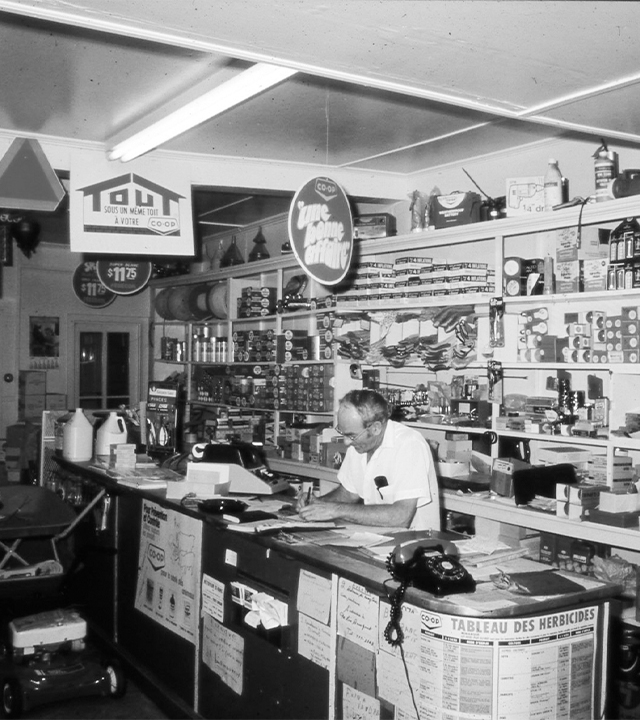
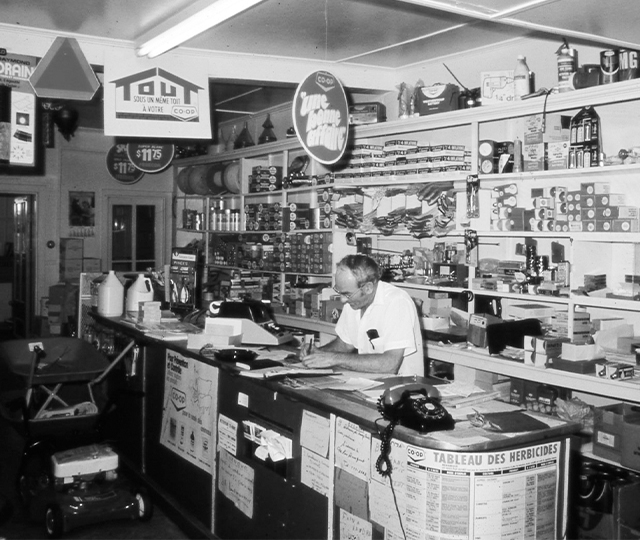
In 1977, a first 23,000 sq.ft. warehouse was built, marking an important step in the company's logistics. That same year, a strategic partnership with Coop Fédérée, now Sollio Groupe Coopératif, opened access to the clientele in the agricultural sector. This was the birth of Quincaillerie Co-op, which became Unimat in 2003.
During the 1980s, a first slogan was created: Bien mieux renseigné pour bien mieux rénover (Better informed to better renovate). The training of in-store advisors was emphasized more than ever to provide expert consulting services to customers and to be recognized as a destination of choice. A new store prototype was introduced, strengthening the uniformity of the brand, in addition to increasing brand awareness among consumers. In 1985, BMR launched its first private label products, notably BMR paint, which experienced remarkable success at the time!
The evolution toward modern home improvement centres
The 1990s were marked by an acceleration of computerization and the arrival of the first big-box stores. Facing these new competitors, BMR rethought the design of its stores and its merchandising strategy to move towards the creation of "one-stop shop" style renovation centres. With this goal in mind, 16,000 hardware products were integrated into the offering distributed by BMR.
Then, the first electronic catalogue was created, revolutionizing purchasing habits and strengthening the company's competitiveness in the market. In 1996, the BMR network had over 200 dealers, and the banner evolved into "BMR Le groupe" (BMR The Group), accompanied by a modernization of stores to maximize sales space.
Growth, diversification, and network consolidation
At the turn of the millennium, the company experienced a major expansion phase and, in 2002, proceeded with a large-scale expansion of its Longueuil warehouse, increasing it to 120,000 sq.ft. BMR adapted its marketing plan to launch the BMR Quincaillerie (BMR Hardware) banner, intended for potential dealers specializing in hardware products. This initiative quickly allowed it to strengthen its presence, particularly in Greater Montreal.
In 2003, BMR created its retail division and acquired its first corporate Matco stores, located in regions where the company was underrepresented. Five years later, it integrated the 5 Potvin & Bouchard renovation centres in Saguenay–Lac-Saint-Jean.
Modernization, agriculture, and the cooperative shift
In 2010, BMR launched Agrizone, a range of agricultural products designed to more effectively meet the needs of regional and rural customers. Simultaneously, a brand image overhaul was implemented. From the logo to flyers, including vehicles and the website, everything was redesigned to modernize and keep up with customer evolution. It was during this exercise that the logo sporting a 6-branched "B", in honour of its 6 founders, was created.
In 2015, a strategic turning point occurred: Groupe BMR became a division of La Coop Fédérée, now Sollio Cooperative Group, and within a few months grew from 187 to 330 dealers, thanks to the integration of the Unimat network. The entire logistics chain was redesigned to support this growth. This strategic decision allowed La Coop Fédérée to ensure the long-term viability of its hardware division, and BMR to have the necessary resources to face increasing competition.
BMR today: a collective success focused on the future
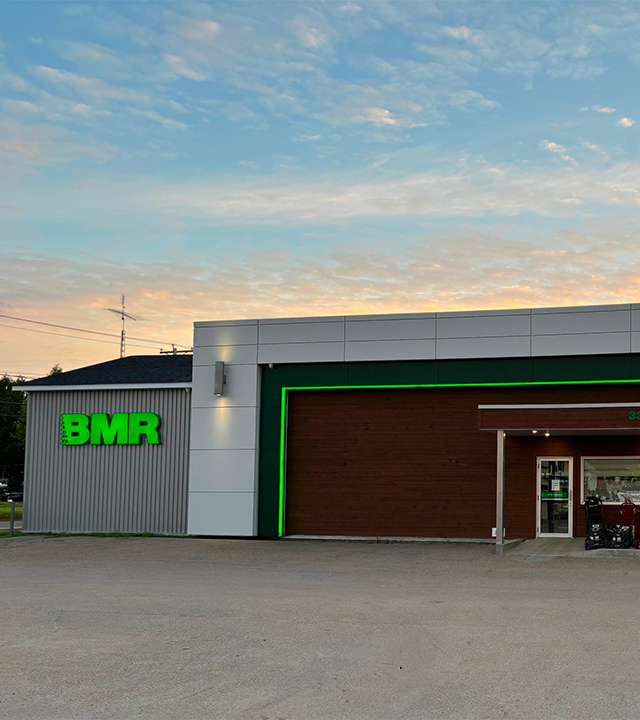
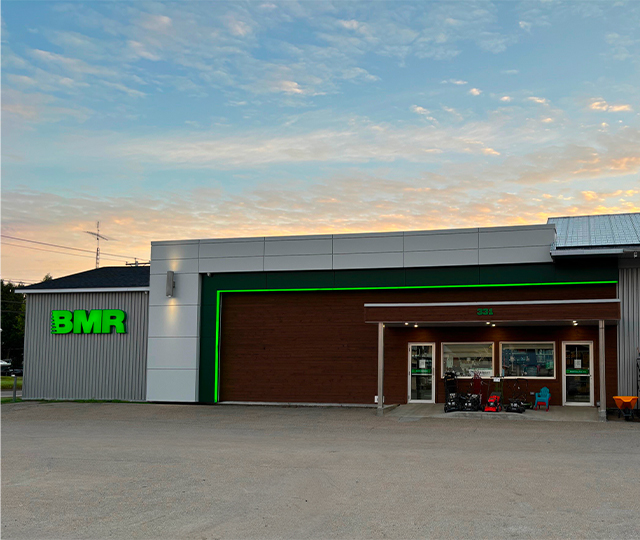
Today, BMR embodies much more than a network of renovation centres: it is an essential partner for experts in the field, a pillar of Eastern Canada, and a company deeply rooted in its communities, driven by values of excellence and passion. Faithful to the pioneering spirit of its six founders, BMR relies on the union of forces to continue to innovate and grow in a constantly evolving market.
BMR is the story of a collective success, a human company that, for almost six decades, has contributed to building communities here, one project at a time.