
Lines
Our rope hardware includes a variety of options, such as twisted sisal, nylon, or polypropylene ropes. Strong and versatile, they are suitable for both home projects and outdoor use.
-
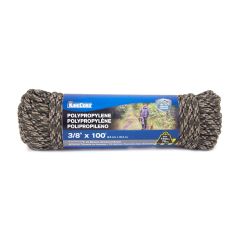 KINGCORDPolypropylene 32-Strand Diamond Braid Rope - Open Field - 3/8" x 100'Polypropylene is a general-purpose synthetic rope. It is inexpensive, lightweight, and does not absorb water, which allows the rope to float and makes it particularly useful for marine applications and pools. It has medium stretch characteristics that allow the rope to slowly stretch. Ultraviolet (UV) light inhibitors have been added to prevent degradation. Relative to other synthetic ropes, polypropylene does not hold knots well and has limited abrasion resistance.$23.98
- In stock
- In-store pickup
- Parcel delivery
- Truck delivery
-
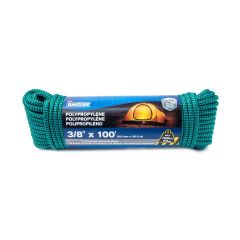 KINGCORDPolypropylene 32-Strand Diamond Braid Rope - Waterfall - 3/8" x 100'Polypropylene is a general-purpose synthetic rope. It is inexpensive, lightweight, and does not absorb water, which allows the rope to float and makes it particularly useful for marine applications and pools. It has medium stretch characteristics that allow the rope to slowly stretch. Ultraviolet (UV) light inhibitors have been added to prevent degradation. Relative to other synthetic ropes, polypropylene does not hold knots well and has limited abrasion resistance.$23.98
- In stock
- In-store pickup
- Parcel delivery
- Truck delivery
-
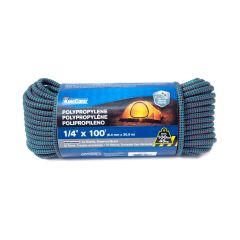 KINGCORDPolypropylene 32-Strand Diamond Braid Rope - Crystal Waters - 1/4" x 100'Polypropylene is a general-purpose synthetic rope. It is inexpensive, lightweight, and does not absorb water, which allows the rope to float and makes it particularly useful for marine applications and pools. It has medium stretch characteristics that allow the rope to slowly stretch. Ultraviolet (UV) light inhibitors have been added to prevent degradation. Relative to other synthetic ropes, polypropylene does not hold knots well and has limited abrasion resistance.$13.48
- In stock
- In-store pickup
- Parcel delivery
- Truck delivery
-
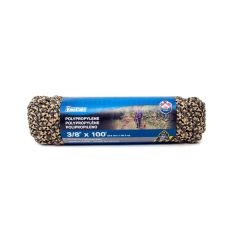 KINGCORDPolypropylene Camouflage Diamond Braid Rope - Camouflage - 3/8" x 100'If it is important that the rope blends into the surrounding environment, consider using camouflage rope. This 100% polypropylene, diamond braid rope is light weight and floats. Available in three distinct color patterns: Forest (brown tones), Open Field (green tones), and Frozen Tundra (gray tones).$18.98
- In stock
- In-store pickup
- Parcel delivery
- Truck delivery
-
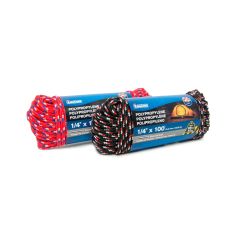 KINGCORDPolypropylene Diamond Braid Rope - Blue/Black/White/Red - 1/4" x 100'Polypropylene is a general-purpose synthetic rope. It is inexpensive, lightweight, and does not absorb water, which allows the rope to float and makes it particularly useful for marine applications and pools. It has medium stretch characteristics that allow the rope to slowly stretch. Ultraviolet (UV) light inhibitors have been added to prevent degradation. Relative to other synthetic ropes, polypropylene does not hold knots well and has limited abrasion resistance.$13.48
- In stock
- In-store pickup
- Parcel delivery
- Truck delivery
-
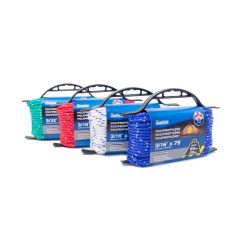 KINGCORDPolypropylene Diamond Braid Rope - Blue/Black/White/Red/Green/Yellow/Purple - 3/16" x 75'Polypropylene is a general-purpose synthetic rope. It is inexpensive, lightweight, and does not absorb water, which allows the rope to float and makes it particularly useful for marine applications and pools. It has medium stretch characteristics that allow the rope to slowly stretch. Ultraviolet (UV) light inhibitors have been added to prevent degradation. Relative to other synthetic ropes, polypropylene does not hold knots well and has limited abrasion resistance.$6.98
- In stock
- In-store pickup
- Parcel delivery
- Truck delivery
-
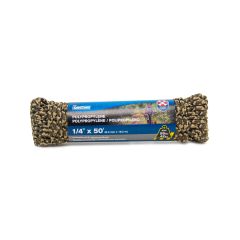 KINGCORDPolypropylene Camouflage Diamond Braid Rope - Open Field - 1/4" x 50'If it is important that the rope blends into the surrounding environment, consider using camouflage rope. This 100% polypropylene, diamond braid rope is light weight and floats. Available in three distinct color patterns: Forest (brown tones), Open Field (green tones), and Frozen Tundra (gray tones).$6.48
- In stock
- In-store pickup
- Parcel delivery
- Truck delivery
-
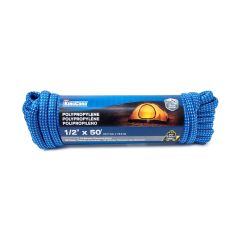 KINGCORDPolypropylene 32-Strand Diamond Braid Rope - Steel - 1/2" x 50'Polypropylene is a general-purpose synthetic rope. It is inexpensive, lightweight, and does not absorb water, which allows the rope to float and makes it particularly useful for marine applications and pools. It has medium stretch characteristics that allow the rope to slowly stretch. Ultraviolet (UV) light inhibitors have been added to prevent degradation. Relative to other synthetic ropes, polypropylene does not hold knots well and has limited abrasion resistance.$18.48
- Available online
- 7 to 10 day pickup
- Parcel delivery
-
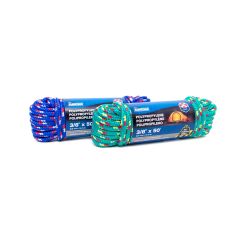 KINGCORDPolypropylene Diamond Braid Rope - 3/8" x 50'Polypropylene is a general-purpose synthetic rope. It is inexpensive, lightweight, and does not absorb water, which allows the rope to float and makes it particularly useful for marine applications and pools. It has medium stretch characteristics that allow the rope to slowly stretch. Ultraviolet (UV) light inhibitors have been added to prevent degradation. Relative to other synthetic ropes, polypropylene does not hold knots well and has limited abrasion resistance.$10.48
- In stock
- In-store pickup
- Parcel delivery
- Truck delivery
-
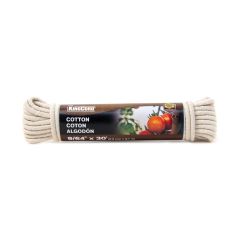 KINGCORDDiamond Braid Venetian Blind Cord - Natural - 9/64" x 30'Cotton rope is made of a widely used natural fiber, often in the form of small twines and cords. It is a strong natural fiber that is soft, pliable, and easy on the hands. Due in part to its medium strength characteristics, cotton is an excellent choice for a wide variety of common household uses, including in the kitchen, garden, for blinds, crafts, or package bundling.$3.28
- In stock
- In-store pickup
- Parcel delivery
- Truck delivery
-
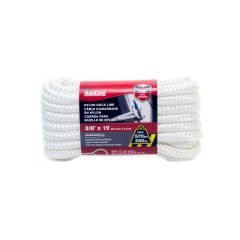 KINGCORDNylon Double Diamond Braid Marine Dock Line - White - 3/8" x 15'KingCord offers a line of anchor and dock lines that are specifically designed for marine applications. Nylon offers the highest workload and its ability to stretch under load reduces shock loads on a boat. This shock absorbing ability makes it particularly suitable for these types of applications. All anchor lines come with a spliced in thimble for easy attachment to an anchor rode. All dock lines come with a 10 in (254 mm) eye splice for ease of use on a cleat. Nylon double braided line has a diamond braided cover and a diamond braided core for superior strength and performance.$17.48
- In stock
- In-store pickup
- Parcel delivery
- Truck delivery
-
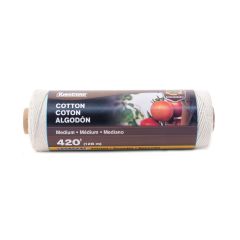 KINGCORDTwisted Cotton Rope - Natural -Medium x 420'Cotton rope is made of a widely used natural fiber, often in the form of small twines and cords. It is a strong natural fiber that is soft, pliable, and easy on the hands. Due in part to its medium strength characteristics, cotton is an excellent choice for a wide variety of common household uses, including in the kitchen, garden, for blinds, crafts, or package bundling. ** Please note that this product may not be available individually from your store. **$4.38
- In stock
- In-store pickup
- Parcel delivery
- Truck delivery
-
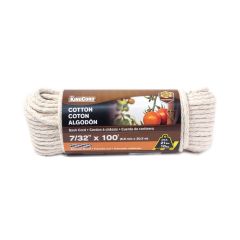 KINGCORDSmooth Braid Cotton Rope - Natural - 7/32" x 100'Cotton rope is made of a widely used natural fiber, often in the form of small twines and cords. It is a strong natural fiber that is soft, pliable, and easy on the hands. Due in part to its medium strength characteristics, cotton is an excellent choice for a wide variety of common household uses, including in the kitchen, garden, for blinds, crafts, or package bundling.$13.98
- In stock
- In-store pickup
- Parcel delivery
- Truck delivery
-
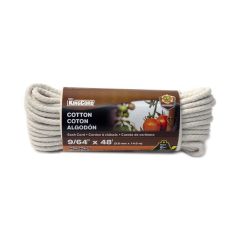 KINGCORDSmooth Braid Cotton Rope - Natural - 9/64" x 48'Cotton rope is made of a widely used natural fiber, often in the form of small twines and cords. It is a strong natural fiber that is soft, pliable, and easy on the hands. Due in part to its medium strength characteristics, cotton is an excellent choice for a wide variety of common household uses, including in the kitchen, garden, for blinds, crafts, or package bundling.$3.98
- In stock
- In-store pickup
- Parcel delivery
- Truck delivery
-
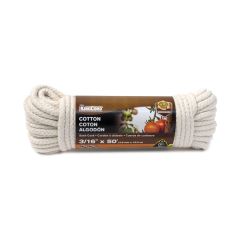 KINGCORDSmooth Braid Cotton Rope - Natural - 3/16" x 50'Cotton rope is made of a widely used natural fiber, often in the form of small twines and cords. It is a strong natural fiber that is soft, pliable, and easy on the hands. Due in part to its medium strength characteristics, cotton is an excellent choice for a wide variety of common household uses, including in the kitchen, garden, for blinds, crafts, or package bundling.$6.48
- In stock
- In-store pickup
- Parcel delivery
- Truck delivery
-
 KINGCORDSisal Twisted Twine Rope - Natural - 1/4" x 100'Sisal rope is made with the fibers found in the leaf of the Agave sisalana plant and has a very rustic look and natural feel. It is a hard natural fiber that is resistant to salt water and was initially used for rope on sailing vessels. Sisal can be easily damaged by moisture, ultraviolet (UV) light, and many common chemicals. It is resistant to salt water and is often found in the form of small twines and cords. Sisal is an excellent option for medium duty use on indoor plants, in the garden, for crafts, and for package bundling.$13.98
- In stock
- In-store pickup
- Parcel delivery
- Truck delivery
-
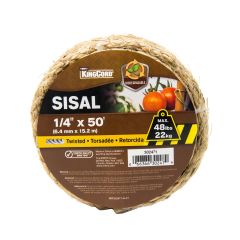 KINGCORDSisal Twisted Twine Rope - Natural - 1/4" x 50'Sisal rope is made with the fibers found in the leaf of the Agave sisalana plant and has a very rustic look and natural feel. It is a hard natural fiber that is resistant to salt water and was initially used for rope on sailing vessels. Sisal can be easily damaged by moisture, ultraviolet (UV) light, and many common chemicals. It is resistant to salt water and is often found in the form of small twines and cords. Sisal is an excellent option for medium duty use on indoor plants, in the garden, for crafts, and for package bundling.$7.48
- Available online
- 7 to 10 day pickup
- Parcel delivery
-
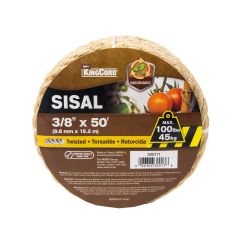 KINGCORDSisal Twisted Twine Rope - Natural - 3/8" x 50'Sisal rope is made with the fibers found in the leaf of the Agave sisalana plant and has a very rustic look and natural feel. It is a hard natural fiber that is resistant to salt water and was initially used for rope on sailing vessels. Sisal can be easily damaged by moisture, ultraviolet (UV) light, and many common chemicals. It is resistant to salt water and is often found in the form of small twines and cords. Sisal is an excellent option for medium duty use on indoor plants, in the garden, for crafts, and for package bundling.$13.98
- In stock
- In-store pickup
- Parcel delivery
- Truck delivery
-
 KINGCORDTwisted Polypropylene Rope - Tan - 1/4" x 100'Polypropylene is a general-purpose synthetic rope. It is inexpensive, lightweight, and does not absorb water, which allows the rope to float and makes it particularly useful for marine applications and pools. It has medium stretch characteristics that allow the rope to slowly stretch. Ultraviolet (UV) light inhibitors have been added to prevent degradation. Relative to other synthetic ropes, polypropylene does not hold knots well and has limited abrasion resistance.$8.28
- In stock
- In-store pickup
- Parcel delivery
- Truck delivery
-
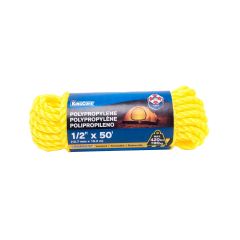 KINGCORDTwisted Polypropylene Rope - Yellow - 1/2" x 50'Polypropylene is a general-purpose synthetic rope. It is inexpensive, lightweight, and does not absorb water, which allows the rope to float and makes it particularly useful for marine applications and pools. It has medium stretch characteristics that allow the rope to slowly stretch. Ultraviolet (UV) light inhibitors have been added to prevent degradation. Relative to other synthetic ropes, polypropylene does not hold knots well and has limited abrasion resistance.$9.28
- In stock
- In-store pickup
- Parcel delivery
- Truck delivery
-
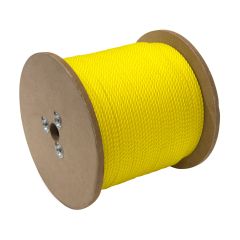 KINGCORDTwisted Polypropylene Rope - Yellow - 1/4" x 1,200'Polypropylene is a general-purpose synthetic rope. It is inexpensive, lightweight, and does not absorb water, which allows the rope to float and makes it particularly useful for marine applications and pools. It has medium stretch characteristics that allow the rope to slowly stretch. Ultraviolet (UV) light inhibitors have been added to prevent degradation. Relative to other synthetic ropes, polypropylene does not hold knots well and has limited abrasion resistance.$74.98
- In stock
- In-store pickup
- Parcel delivery
- Truck delivery
-
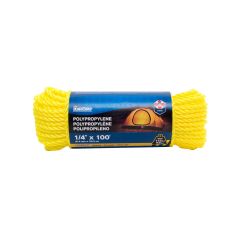 KINGCORDTwisted Polypropylene Rope - Yellow - 1/4" x 100'Polypropylene is a general-purpose synthetic rope. It is inexpensive, lightweight, and does not absorb water, which allows the rope to float and makes it particularly useful for marine applications and pools. It has medium stretch characteristics that allow the rope to slowly stretch. Ultraviolet (UV) light inhibitors have been added to prevent degradation. Relative to other synthetic ropes, polypropylene does not hold knots well and has limited abrasion resistance.$6.28
- In stock
- In-store pickup
- Parcel delivery
- Truck delivery
-
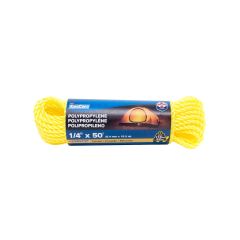 KINGCORDTwisted Polypropylene Rope - Yellow - 1/4" x 50'Polypropylene is a general-purpose synthetic rope. It is inexpensive, lightweight, and does not absorb water, which allows the rope to float and makes it particularly useful for marine applications and pools. It has medium stretch characteristics that allow the rope to slowly stretch. Ultraviolet (UV) light inhibitors have been added to prevent degradation. Relative to other synthetic ropes, polypropylene does not hold knots well and has limited abrasion resistance.$3.48
- In stock
- In-store pickup
- Parcel delivery
- Truck delivery
-
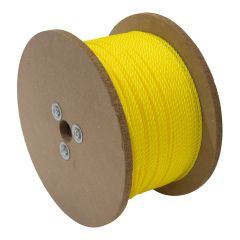 KINGCORDTwisted Polypropylene Rope - Yellow - 3/16" x 900'Polypropylene is a general-purpose synthetic rope. It is inexpensive, lightweight, and does not absorb water, which allows the rope to float and makes it particularly useful for marine applications and pools. It has medium stretch characteristics that allow the rope to slowly stretch. Ultraviolet (UV) light inhibitors have been added to prevent degradation. Relative to other synthetic ropes, polypropylene does not hold knots well and has limited abrasion resistance.$42.98
- In stock
- In-store pickup
- Parcel delivery
- Truck delivery
-
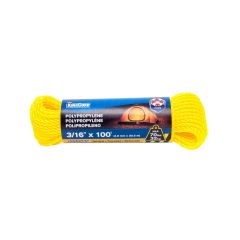 KINGCORDTwisted Polypropylene Rope - Yellow - 3/16" x 100'Polypropylene is a general-purpose synthetic rope. It is inexpensive, lightweight, and does not absorb water, which allows the rope to float and makes it particularly useful for marine applications and pools. It has medium stretch characteristics that allow the rope to slowly stretch. Ultraviolet (UV) light inhibitors have been added to prevent degradation. Relative to other synthetic ropes, polypropylene does not hold knots well and has limited abrasion resistance.$4.58
- In stock
- In-store pickup
- Parcel delivery
- Truck delivery
-
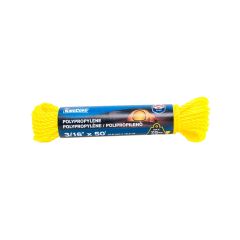 KINGCORDTwisted Polypropylene Rope - Yellow - 3/16" x 50'Polypropylene is a general-purpose synthetic rope. It is inexpensive, lightweight, and does not absorb water, which allows the rope to float and makes it particularly useful for marine applications and pools. It has medium stretch characteristics that allow the rope to slowly stretch. Ultraviolet (UV) light inhibitors have been added to prevent degradation. Relative to other synthetic ropes, polypropylene does not hold knots well and has limited abrasion resistance.$2.28
- In stock
- In-store pickup
- Parcel delivery
- Truck delivery
-
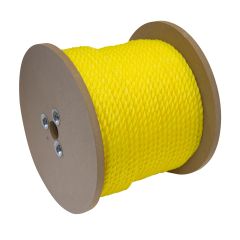 KINGCORDTwisted Polypropylene Rope - Yellow - 3/8" x 400'Polypropylene is a general-purpose synthetic rope. It is inexpensive, lightweight, and does not absorb water, which allows the rope to float and makes it particularly useful for marine applications and pools. It has medium stretch characteristics that allow the rope to slowly stretch. Ultraviolet (UV) light inhibitors have been added to prevent degradation. Relative to other synthetic ropes, polypropylene does not hold knots well and has limited abrasion resistance.$47.98
- In stock
- In-store pickup
- Parcel delivery
- Truck delivery
-
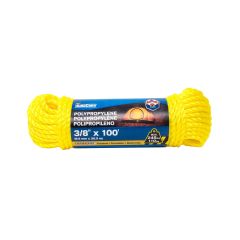 KINGCORDTwisted Polypropylene Rope - Yellow - 3/8" x 100'Polypropylene is a general-purpose synthetic rope. It is inexpensive, lightweight, and does not absorb water, which allows the rope to float and makes it particularly useful for marine applications and pools. It has medium stretch characteristics that allow the rope to slowly stretch. Ultraviolet (UV) light inhibitors have been added to prevent degradation. Relative to other synthetic ropes, polypropylene does not hold knots well and has limited abrasion resistance.$11.98
- In stock
- In-store pickup
- Parcel delivery
- Truck delivery
-
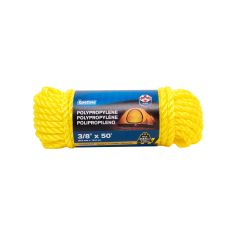 KINGCORDTwisted Polypropylene Rope - Yellow - 3/8" x 50'Polypropylene is a general-purpose synthetic rope. It is inexpensive, lightweight, and does not absorb water, which allows the rope to float and makes it particularly useful for marine applications and pools. It has medium stretch characteristics that allow the rope to slowly stretch. Ultraviolet (UV) light inhibitors have been added to prevent degradation. Relative to other synthetic ropes, polypropylene does not hold knots well and has limited abrasion resistance.$7.98
- In stock
- In-store pickup
- Parcel delivery
- Truck delivery
-
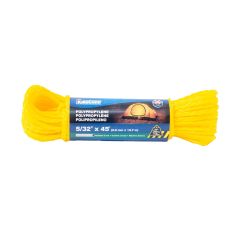 KINGCORDPolypropylene Hollow Core Rope - Yellow - 5/32" x 45'Polypropylene is a general-purpose synthetic rope. It is inexpensive, lightweight, and does not absorb water, which allows the rope to float and makes it particularly useful for marine applications and pools. It has medium stretch characteristics that allow the rope to slowly stretch. Ultraviolet (UV) light inhibitors have been added to prevent degradation. Relative to other synthetic ropes, polypropylene does not hold knots well and has limited abrasion resistance.$2.98
- In stock
- In-store pickup
- Parcel delivery
- Truck delivery
-
 KINGCORDPolypropylene Hollow Core Rope - Yellow - 1/4" x 100'Polypropylene is a general-purpose synthetic rope. It is inexpensive, lightweight, and does not absorb water, which allows the rope to float and makes it particularly useful for marine applications and pools. It has medium stretch characteristics that allow the rope to slowly stretch. Ultraviolet (UV) light inhibitors have been added to prevent degradation. Relative to other synthetic ropes, polypropylene does not hold knots well and has limited abrasion resistance.$7.98
- In stock
- In-store pickup
- Parcel delivery
- Truck delivery
-
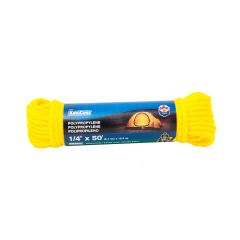 KINGCORDPolypropylene Hollow Core Rope - Yellow - 1/4" x 50'Polypropylene is a general-purpose synthetic rope. It is inexpensive, lightweight, and does not absorb water, which allows the rope to float and makes it particularly useful for marine applications and pools. It has medium stretch characteristics that allow the rope to slowly stretch. Ultraviolet (UV) light inhibitors have been added to prevent degradation. Relative to other synthetic ropes, polypropylene does not hold knots well and has limited abrasion resistance.$3.98
- In stock
- In-store pickup
- Parcel delivery
- Truck delivery
-
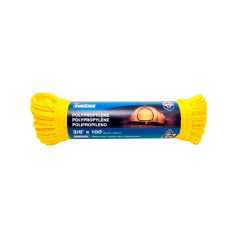 KINGCORDPolypropylene Hollow Core Rope - Yellow - 3/8" x 100'Polypropylene is a general-purpose synthetic rope. It is inexpensive, lightweight, and does not absorb water, which allows the rope to float and makes it particularly useful for marine applications and pools. It has medium stretch characteristics that allow the rope to slowly stretch. Ultraviolet (UV) light inhibitors have been added to prevent degradation. Relative to other synthetic ropes, polypropylene does not hold knots well and has limited abrasion resistance.$26.48
- In stock
- In-store pickup
- Parcel delivery
- Truck delivery
-
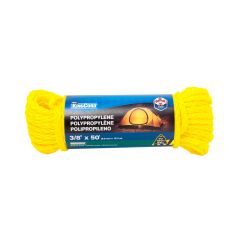 KINGCORDPolypropylene Hollow Core Rope - Yellow - 3/8" x 50'Polypropylene is a general-purpose synthetic rope. It is inexpensive, lightweight, and does not absorb water, which allows the rope to float and makes it particularly useful for marine applications and pools. It has medium stretch characteristics that allow the rope to slowly stretch. Ultraviolet (UV) light inhibitors have been added to prevent degradation. Relative to other synthetic ropes, polypropylene does not hold knots well and has limited abrasion resistance.$12.98
- In stock
- In-store pickup
- Parcel delivery
- Truck delivery
-
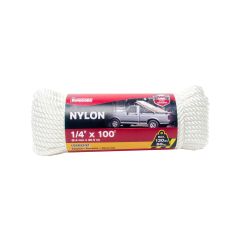 KINGCORDNylon Twisted Rope - White - 1/4" x 100'Nylon is the strongest synthetic material for commonly used DIY rope. Nylon has significant elasticity and is best used for absorbing shock loads such as experienced when towing. Nylon rope absorbs the shock, stretches, and then returns close to its original length once the load has been removed. Nylon has good abrasion resistance, does not float, and will absorb water when wet. When nylon is wet it will shrink slightly and lose 10% to 15% of its strength. Nylon is ideal for use as a tow rope, anchor line, dock line, safety lines, and tie-downs.$17.98
- In stock
- In-store pickup
- Parcel delivery
- Truck delivery
-
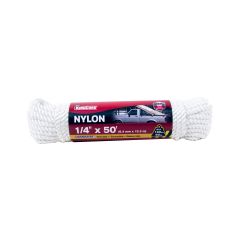 KINGCORDNylon Twisted Rope - White - 1/4" x 50'Nylon is the strongest synthetic material for commonly used DIY rope. Nylon has significant elasticity and is best used for absorbing shock loads such as experienced when towing. Nylon rope absorbs the shock, stretches, and then returns close to its original length once the load has been removed. Nylon has good abrasion resistance, does not float, and will absorb water when wet. When nylon is wet it will shrink slightly and lose 10% to 15% of its strength. Nylon is ideal for use as a tow rope, anchor line, dock line, safety lines, and tie-downs.$9.98
- In stock
- In-store pickup
- Parcel delivery
- Truck delivery
-
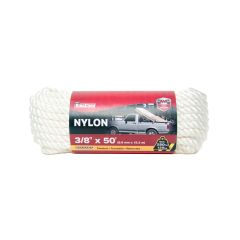 KINGCORDNylon Twisted Rope - White - 3/8" x 50'Nylon is the strongest synthetic material for commonly used DIY rope. Nylon has significant elasticity and is best used for absorbing shock loads such as experienced when towing. Nylon rope absorbs the shock, stretches, and then returns close to its original length once the load has been removed. Nylon has good abrasion resistance, does not float, and will absorb water when wet. When nylon is wet it will shrink slightly and lose 10% to 15% of its strength. Nylon is ideal for use as a tow rope, anchor line, dock line, safety lines, and tie-downs.$25.98
- In stock
- In-store pickup
- Parcel delivery
- Truck delivery
-
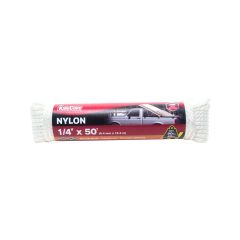 KINGCORDNylon Smooth Braid Rope - White - 1/4" x 50'Nylon is the strongest synthetic material for commonly used DIY rope. Nylon has significant elasticity and is best used for absorbing shock loads such as experienced when towing. Nylon rope absorbs the shock, stretches, and then returns close to its original length once the load has been removed. Nylon has good abrasion resistance, does not float, and will absorb water when wet. When nylon is wet it will shrink slightly and lose 10% to 15% of its strength. Nylon is ideal for use as a tow rope, anchor line, dock line, safety lines, and tie-downs.$9.98
- In stock
- In-store pickup
- Parcel delivery
- Truck delivery
-
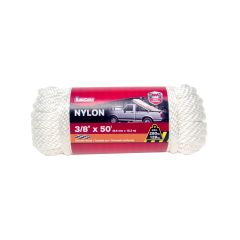 KINGCORDNylon Smooth Braid Rope - White - 3/8" x 50'Nylon is the strongest synthetic material for commonly used DIY rope. Nylon has significant elasticity and is best used for absorbing shock loads such as experienced when towing. Nylon rope absorbs the shock, stretches, and then returns close to its original length once the load has been removed. Nylon has good abrasion resistance, does not float, and will absorb water when wet. When nylon is wet it will shrink slightly and lose 10% to 15% of its strength. Nylon is ideal for use as a tow rope, anchor line, dock line, safety lines, and tie-downs.$29.98
- In stock
- In-store pickup
- Parcel delivery
- Truck delivery
-
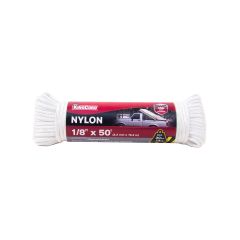 KINGCORDNylon Diamond Braid Rope - White - 1/8" x 50'Nylon is the strongest synthetic material for commonly used DIY rope. Nylon has significant elasticity and is best used for absorbing shock loads such as experienced when towing. Nylon rope absorbs the shock, stretches, and then returns close to its original length once the load has been removed. Nylon has good abrasion resistance, does not float, and will absorb water when wet. When nylon is wet it will shrink slightly and lose 10% to 15% of its strength. Nylon is ideal for use as a tow rope, anchor line, dock line, safety lines, and tie-downs.$2.48
- In stock
- In-store pickup
- Parcel delivery
- Truck delivery
-
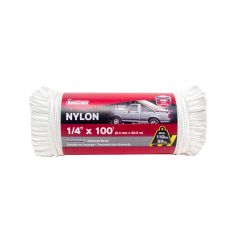 KINGCORDNylon Diamond Braid Rope - White - 1/4" x 100'Nylon is the strongest synthetic material for commonly used DIY rope. Nylon has significant elasticity and is best used for absorbing shock loads such as experienced when towing. Nylon rope absorbs the shock, stretches, and then returns close to its original length once the load has been removed. Nylon has good abrasion resistance, does not float, and will absorb water when wet. When nylon is wet it will shrink slightly and lose 10% to 15% of its strength. Nylon is ideal for use as a tow rope, anchor line, dock line, safety lines, and tie-downs.$19.98
- In stock
- In-store pickup
- Parcel delivery
- Truck delivery
-
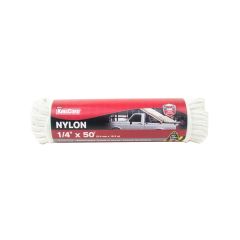 KINGCORDNylon Diamond Braid Rope - White - 1/4" x 50'Nylon is the strongest synthetic material for commonly used DIY rope. Nylon has significant elasticity and is best used for absorbing shock loads such as experienced when towing. Nylon rope absorbs the shock, stretches, and then returns close to its original length once the load has been removed. Nylon has good abrasion resistance, does not float, and will absorb water when wet. When nylon is wet it will shrink slightly and lose 10% to 15% of its strength. Nylon is ideal for use as a tow rope, anchor line, dock line, safety lines, and tie-downs.$9.98
- In stock
- In-store pickup
- Parcel delivery
- Truck delivery
-
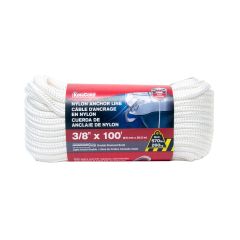 KINGCORDNylon Double Diamond Braid Marine Anchor Line - White - 3/8" x 100'KingCord offers a line of anchor and dock lines that are specifically designed for marine applications. Nylon offers the highest workload and its ability to stretch under load reduces shock loads on a boat. This shock absorbing ability makes it particularly suitable for these types of applications. All anchor lines come with a spliced in thimble for easy attachment to an anchor rode. All dock lines come with a 10 in (254 mm) eye splice for ease of use on a cleat. Nylon double braided line has a diamond braided cover and a diamond braided core for superior strength and performance.$62.98
- In stock
- In-store pickup
- Parcel delivery
- Truck delivery
-
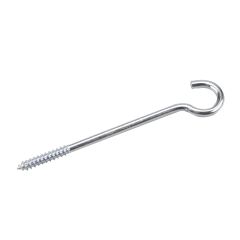 RICHELIEUClothesline hook and lag threadDon't worry anymore if the clothesline will support the weight or not thanks to this robust hook.$2.98
- In stock
- In-store pickup
- Parcel delivery
- Truck delivery
-
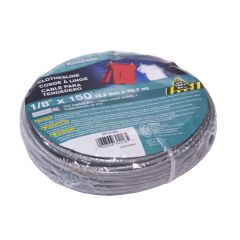 KINGCORDPVC Coated Clothesline Wire, 1/8" x 150'PVC is the most popular plastic for coating wires, as it is relatively low in cost, resilient, fire retardant, and possesses good insulating properties.$38.98
 -
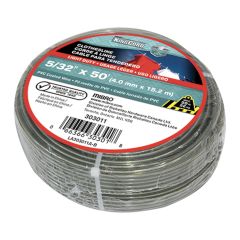 KINGCORDPVC-Coated Wire Clothesline - Green - 5/32" x 50'PVC-Coated Wire Clothesline is water, sunlight and sag resistant. It's very easy to use. With twisted wire cable through its core, this clothesline has a high work load. It wipes clean with a damp sponge or cloth. Using a clothesline can help keep your electricity costs down and reduces wear-and-tear on clothes.$6.48
 -
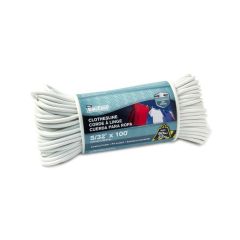 KINGCORDPVC Coated Polypropylene Rope - 5/32" x 100'PVC-Coated Polypropylene Clothesline is a light-duty option compared to its wire rope counterpart. PVC plastic keeps the line soft, pliable and easy to handle. The coating offers great weather resistance and its white colour makes it easy to see from afar. Store wet or dry. Do not use for overhead lifting. Never exceed the Safe Working Load (SWL).$7.98
- In stock
- In-store pickup
- Truck delivery
-
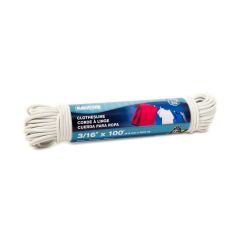 KINGCORDPVC Coated Polypropylene Rope - 3/16" x 100'PVC-Coated Polypropylene Clothesline is a light-duty option compared to its wire rope counterpart. PVC plastic keeps the line soft, pliable and easy to handle. The coating offers great weather resistance and its white colour makes it easy to see from afar. Store wet or dry. Do not use for overhead lifting. Never exceed the Safe Working Load (SWL).$9.98
- In stock
- In-store pickup
- Truck delivery