Staining a wooden deck helps protect the wood against humidity, UV rays, and wear, while extending its lifespan. To achieve a long-lasting result, every step counts: the timing, the preparation of the wood, the type of stain, and the application method.
This practical guide explains when and how to stain a deck, taking into account real-life usage conditions in Canada. It is intended for DIY enthusiasts who want to do the job correctly, without costly errors or premature maintenance.
When to stain a deck (ideal conditions)
Stain a deck when conditions favour good penetration and even drying.
- Ideal temperature: between 10°C and 25°C.
- Completely dry wood: no rain for 48 hours prior and no rain forecast for 24 to 48 hours after application.
- Time of day: in the shade, away from direct sunlight.
- Time of year: late spring, moderate summer, or early autumn.
Avoid staining in very hot or humid weather, or when dew may form in the evening.
Preparing a deck before staining
Surface preparation is essential for the stain to adhere correctly and last over time. Poorly prepared wood does not absorb the product properly and wears out more quickly.
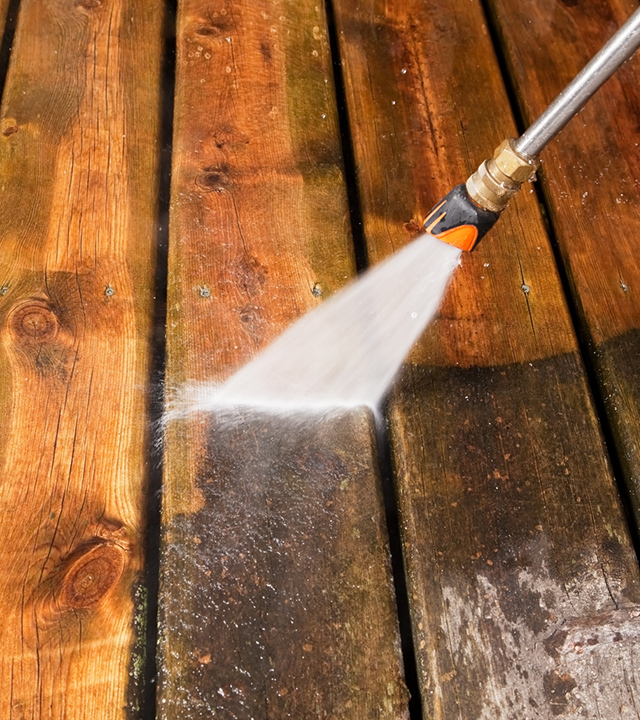
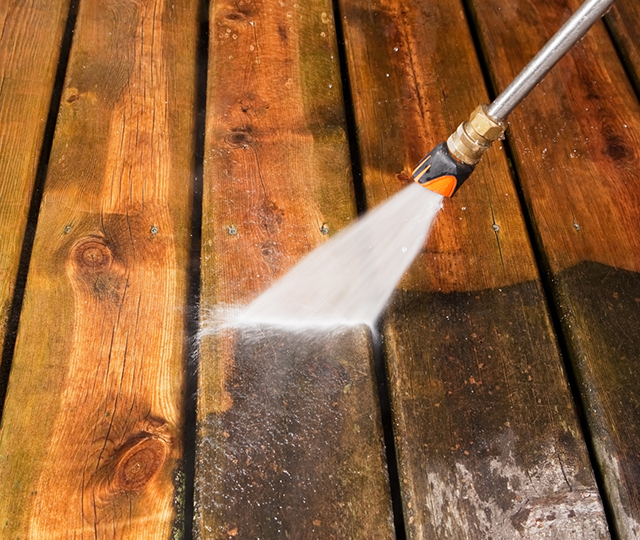
- Start by cleaning the deck to remove dirt, dust, and accumulated residue. After cleaning, let the wood dry completely before proceeding.
- Sanding is not always necessary. It is especially useful when the wood is very rough, the old stain is peeling, or the surface no longer absorbs water. Once the surface is ready, ensure it is clean and dust-free before applying the stain.
- The extent of preparation varies depending on the condition of the wood. A new deck generally requires little intervention, while an older deck often requires more careful work. Regular maintenance also makes future preparations easier, as explained in the BMR article on balcony maintenance.
Choosing the right stain for a wooden deck
The choice of stain directly influences the appearance of the deck and the frequency of maintenance. It is important to opt for a product adapted to the type of wood and the exposure of the surface.
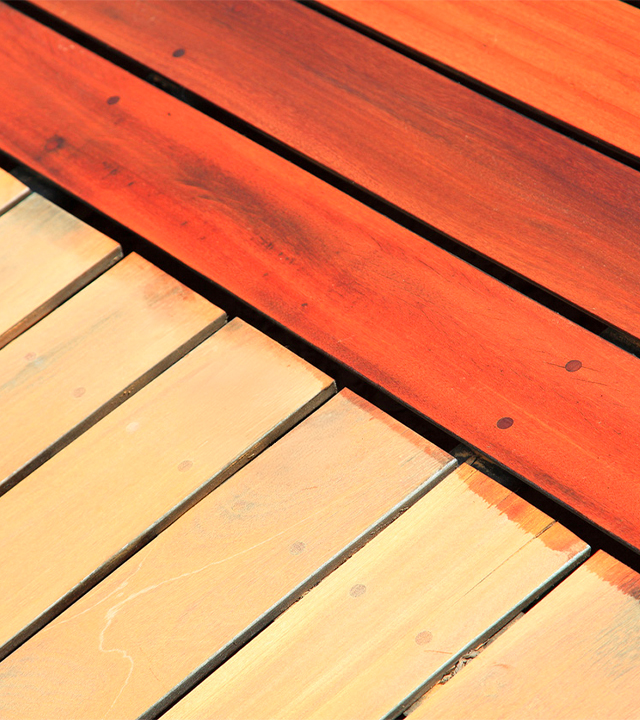
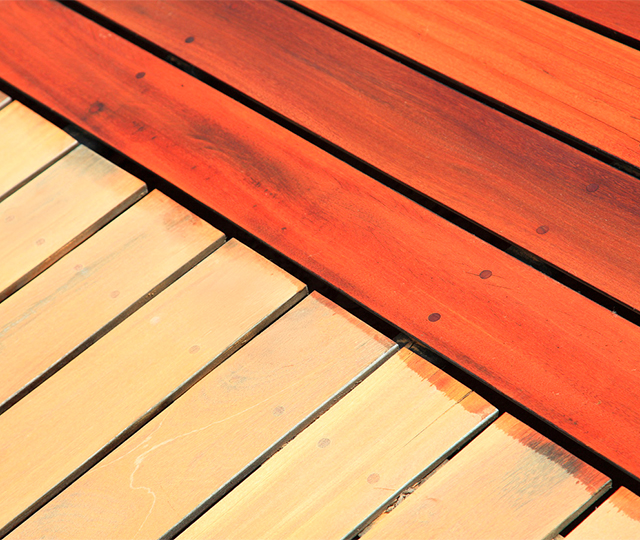
Transparent stains highlight the wood grain but offer limited protection and require more frequent applications. Semi-transparent stains often represent a good compromise between protection and natural appearance. Opaque stains, for their part, mask the wood grain but provide the most durable protection.
The type of formulation also plays a role. Water-based stains dry faster and release fewer odours, while oil-based stains generally penetrate deeper into the wood and better tolerate difficult conditions.
The choice must also take into account the existing wood. A stain compatible with the wood type and surface condition allows for a more uniform and durable result.
How to apply the stain correctly
A careful application allows for a uniform finish and prevents visible marks. Take the time to work in sections and apply the stain consistently.
Apply the stain using the appropriate tool, following the direction of the wood grain. Work on small surfaces at a time to maintain a constant finish and avoid visible overlapping marks.
A well-applied coat is generally sufficient. Excessive product application hinders penetration and can result in a sticky or uneven finish. Always allow the required time between coats, when recommended.
During application, avoid walking on freshly stained surfaces and ensure stable conditions are maintained until completely dry.
Pro tip: Use a lint-free cloth for better control or a brush suited to the type of stain, then always wipe off the excess after a few minutes to prevent marks and ensure an even finish.
Drying time and returning to service
Drying time must be respected to avoid damaging the finish and compromising the wood's protection. Returning the deck to service too quickly can leave permanent marks or reduce the durability of the stain.
Before replacing furniture or heavy objects, wait until the stain is completely dry. An additional delay allows the product to harden properly and better resist daily wear and tear.
Respecting these timeframes helps extend the life of the stain and limit premature maintenance.
Common mistakes to avoid
Certain mistakes can quickly compromise the result, even with a good product. Most problems occur during preparation or application.
- Staining wood that is still damp prevents the stain from penetrating properly and leads to an uneven finish. Applying the product in weather that is too hot or in direct sunlight causes the stain to dry too quickly and leaves visible marks.
- Using too much product is another common error. A coat that is too thick will not penetrate correctly and can remain sticky. It is also important to choose a stain compatible with the type of wood and the condition of the surface.
- Finally, returning the deck to service too quickly or neglecting maintenance accelerates the wear of the finish.
For advice tailored to your project and the type of wood of your deck, the specialists at your BMR store can guide you.
Common questions: staining a wooden deck
Last update: March 2026
Shop for outdoor stains
- Add to Wish List
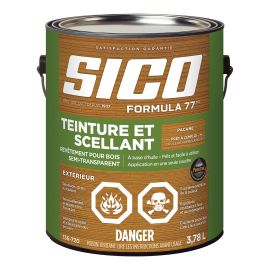
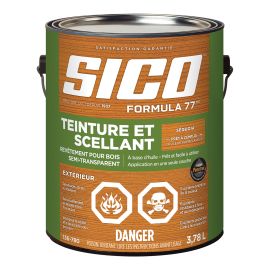
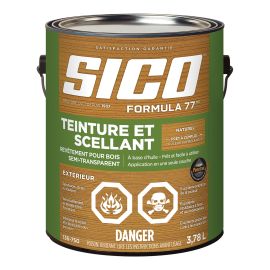
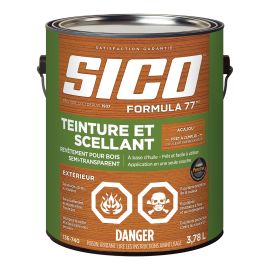
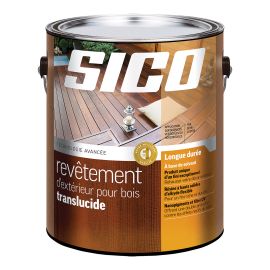 SICOTranslucent Exterior Wood Finish - Century Redwood - 3.78 L$125.99
- In stock
- In-store pickup
- Truck delivery
- Add to Wish List
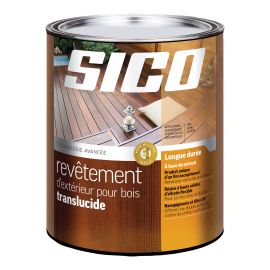 SICOTranslucent Exterior Wood Finish - Century Redwood - 946 ml$50.99
- In stock
- In-store pickup
- Truck delivery
- Add to Wish List
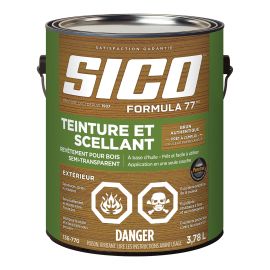
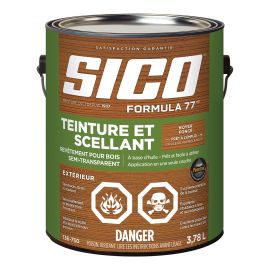
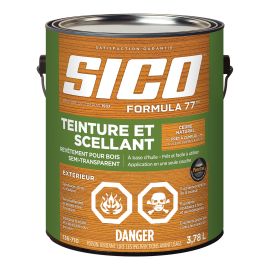
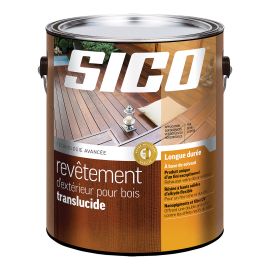 SICOTranslucent Exterior Wood Finish - Natural Oak - 3.78 L$125.99
- In stock
- In-store pickup
- Truck delivery
- Add to Wish List
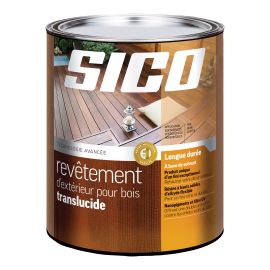 SICOTranslucent Exterior Wood Finish - Natural Oak - 946 ml$50.99
- In stock
- In-store pickup
- Truck delivery
- Add to Wish List
 TECHNISEALWater Based Wood Protector - Mahogany - 19 m² - 3.78 l$41.97 $49.98
- In stock
- In-store pickup
- Truck delivery
- Add to Wish List
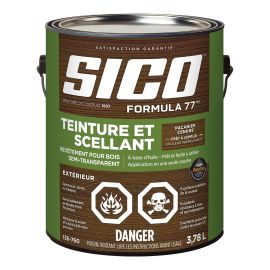
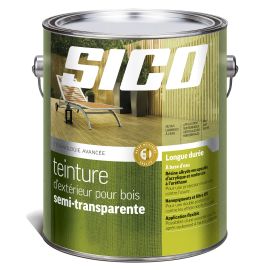 SICOSemi-transparent stain, Tintable base, advanced technology - Satin flat - Teak - 600 ft² - 3.78 l$73.99
- In stock
- In-store pickup
- Truck delivery
- Add to Wish List
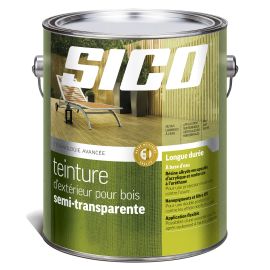 SICOSemi-transparent stain, Tintable base, advanced technology - Satin flat - Sequoia - 600 ft² - 3.78 l$73.99
- In stock
- In-store pickup
- Truck delivery