To help you wait for summer’s arrival, you can start seedlings indoors, a fun, affordable activity that gives your plants a healthy head start, protected from frost.
As early as January, you can start indoor seedlings. It’s a fun and rewarding activity that anyone can enjoy, whether on your own or with family.
When to start planting seeds indoors
It all depends on the plant you choose. For example, onions, tomatos, and cucumbers seeds won’t be planted indoors at the same time.
The table below shows the best planting time for each type:
| Species | Indoor seedling | Outdoor planting |
| Bell pepper | Early March | Early June |
| Parsley | Early March | Mid-May |
| Leek | Early March | Mid-May |
| Onion | Early March | Early May |
| Celery | Mid-March | Late May |
| Basil | Mid-March | Early June |
| Chives | Mid-March | Late May |
| Tomato | Mid-March to mid-April | Early June |
| Cauliflower | Early April | Mid-May |
| Broccoli | Early April | Mid-May |
| Lettuce | Early April | Mid-May |
| Cucumber | Late April | Early June |
Why plant seedlings?
Planting your own seedlings has many benefits. It allows you to not only produce your flowers, fruits and vegetables at a lower cost but also better control all stages of production. You choose which agricultural inputs to use and which species to grow. If you prefer organic products without pesticides, now is the time to plant. Seedlings are used to accelerate the production of certain species that grow more slowly. This is particularly the case for tomatoes, among others.
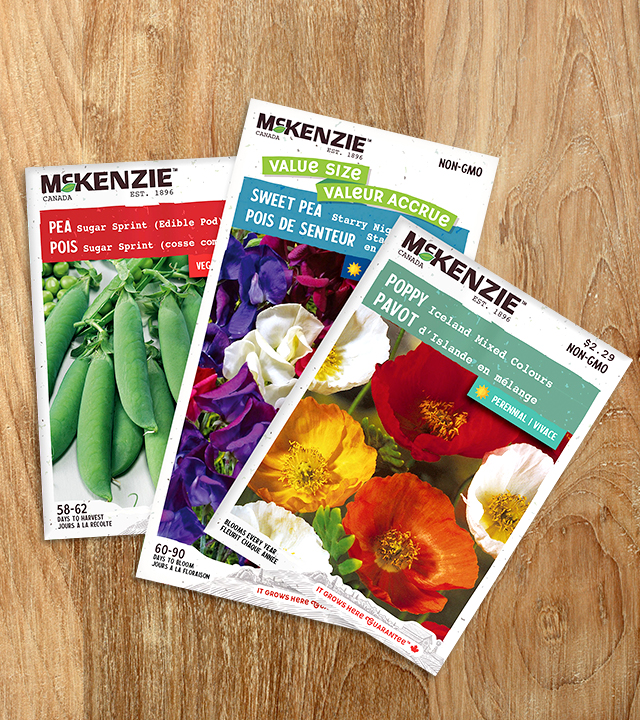
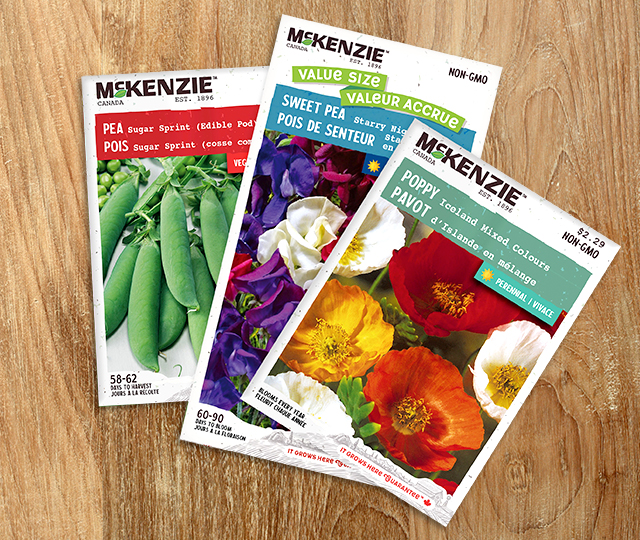
As early as February, a quick visit to your local hardware store will show you that seed displays are overflowing with colorful little packets. Carrots, cucumbers, peppers, herbs, the choices are endless!
To make an informed choice, carefully read the pouches’ back labels. There you will find all the necessary information for your region’s climate and on the germination time required for the species. Some species, for example, require more space to grow properly, while others need plentiful sunlight. For guaranteed success, choose species that are easy to care for, like tomatoes, peppers, or French marigold—with these, you can’t go wrong!
What do you need to start seedlings indoors?
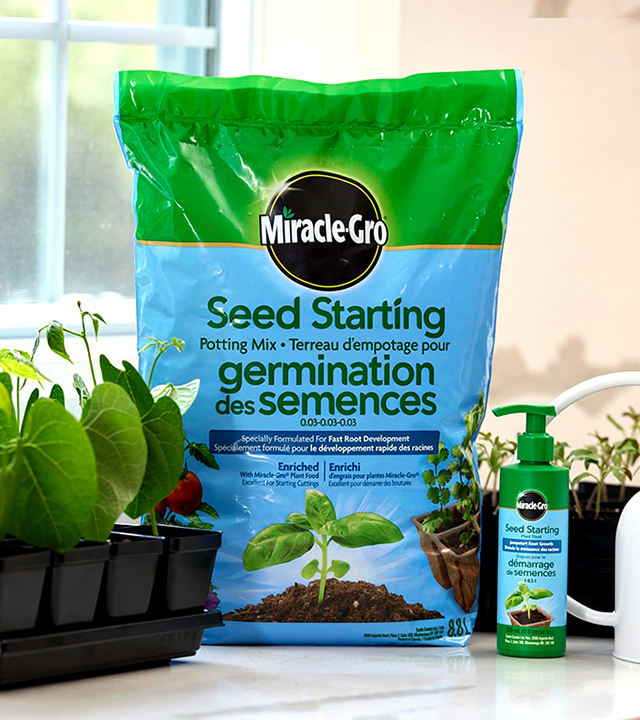
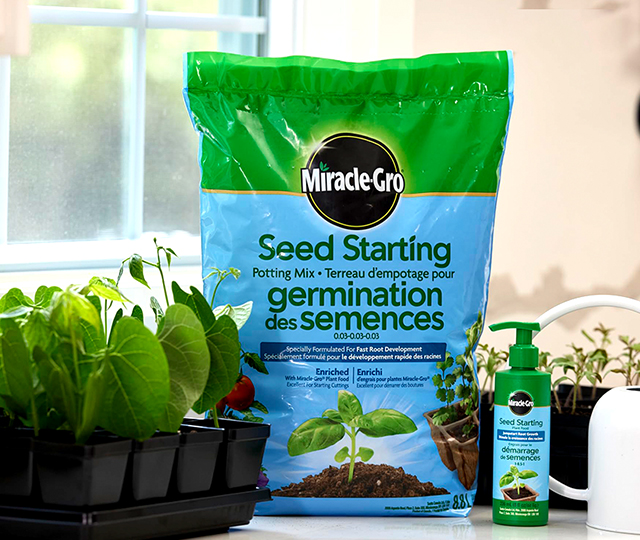
Once you’ve chosen your seedlings, it’s time to get planting supplies. For successful seedlings, you need the right soil. Specialized soils, such as Miracle-Gro seed starting potting mix, are perfect for the job. These lightweight soils are specially formulated to promote root development and start plant cuttings.
For potting, your local BMR dealer offers a full range of peat moss pots of a variety of sizes and quantities per package. You can also reuse a variety small containers from your home; simply ensure to pierce holes in the bottom to allow proper drainage. Yogurt jars, Styrofoam plates, and fruit and vegetable trays are all fine to use.
Prefer an all-in-one kit? You can also use compressed peat moss pellets in a mini greenhouse. Available in different sizes, these starter kits are convenient and easy to use.
If you’re having trouble finding a sunny spot in your home once, you can use grow lights and heat mats to help your seeds germinate more easily.
How to plant seedlings
Ready to get started?
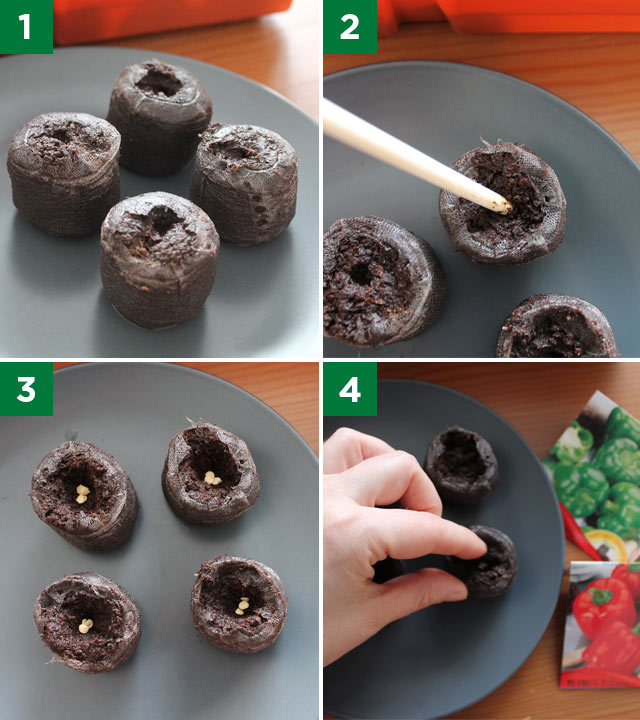
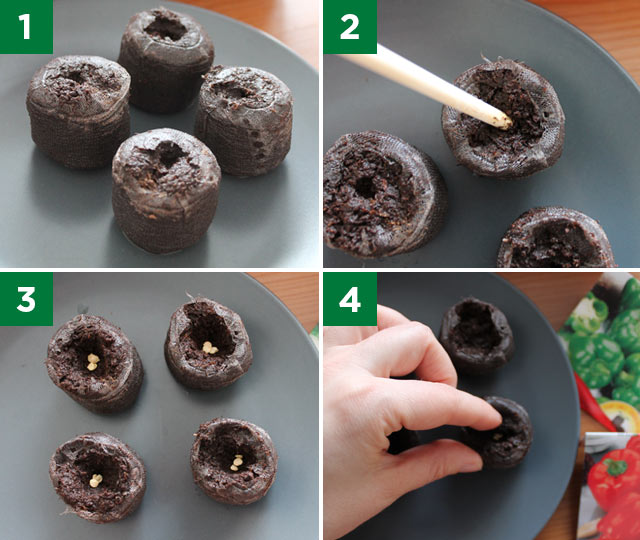
1. Add your pre-moistened potting mix to each small container, or soak your peat pellets to soften them before planting.
2. With a pencil, make a small hole in the centre for the seed.
3. To ensure germination, you can plant two or three seeds per hole. If all the seeds sprout, you can remove the weakest seedling as necessary while transplanting them into your garden.
4. Lightly cover the seeds with soil and water the pots. Then, place them in a plant tray and cover them with a transparent dome; this will help them maintain the moisture required for seed germination. For environmental reasons, keep the plastic tray and dome for future use. All you need to do is purchase peat pellets refills.
For ecological reasons, the plastic tray and dome can be kept for future use. The following year, you can simply purchase new pellets. To promote germination, it is best to place your seedlings in a warm, well-lit area away from direct sunlight.
Depending on the seed species, germination may take anywhere from a few days to several weeks. During this time, ensure that the soil remains damp. However, once germination has begun, it is important to remove the dome to avoid moisture build-up, which could interfere with the seedlings’ growth.
Now that my plants have grown
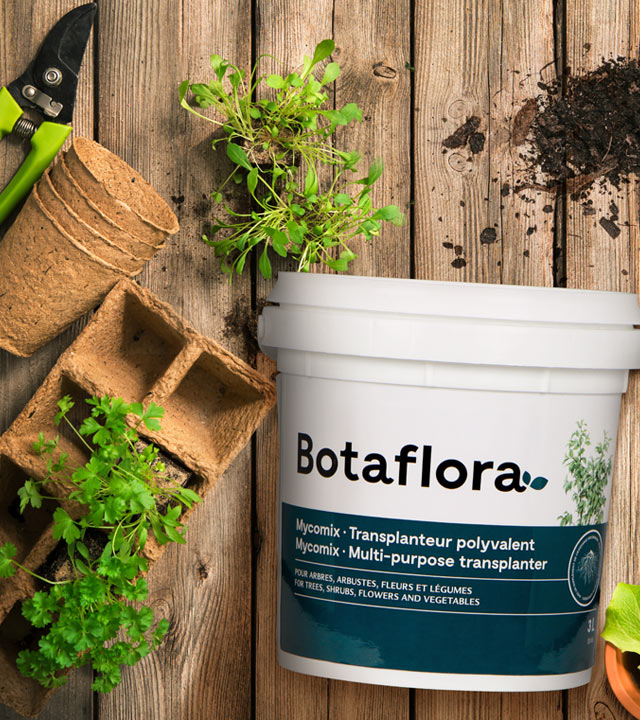
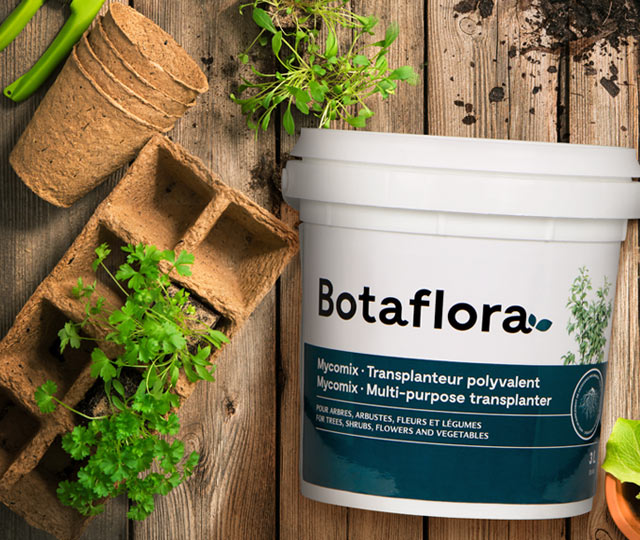
If your seedlings outgrow their pots before the time comes to plant them into your garden, you can transplant them into larger peat moss pots. At this stage, you can add Mycomix transplanter to encourage root development. This product contains helpful fungi that stimulate root growth in your plants. Seaweed can also be used to fertilize your seedlings as they patiently await the warm weather. Follow the packing instructions thoroughly to ensure proper use.
Warm weather on its way? Acclimatize your plants to outside temperatures. Take them out on beautiful spring days while avoiding direct sunlight. Once the risk of frost has passed, you can transplant your little babies you have cared for over the last few weeks into the garden or elsewhere.
Did you know? You can direct sow during the summer, meaning sowing seeds directly in the garden, to extend your harvests. Some vegetables and herbs grow quickly, allowing you to enjoy fresh produce all summer long and even into the fall.
Shop online now or ask expert advice in store to find everything you need to start your indoor seedlings.
Frequently asked questions: Starting your seedlings indoors
Last update: November 2025
Seedling products
- Add to Wish List
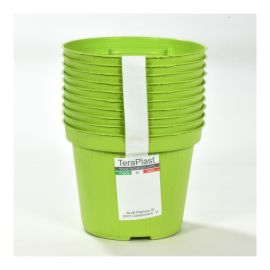 VASERIE P.L.P.Plastic Production Pot for Seedling - Green - 3.9" - 10/Pkg$4.98
- In stock
- In-store pickup
- Parcel delivery
- Add to Wish List
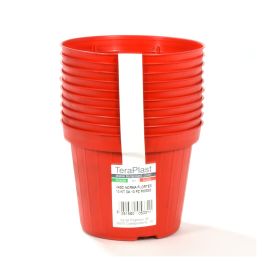 VASERIE P.L.P.Plastic Production Pot for Seedling - Red - 4" - 10/Pkg$4.98
- Available online
- Parcel delivery
- Add to Wish List
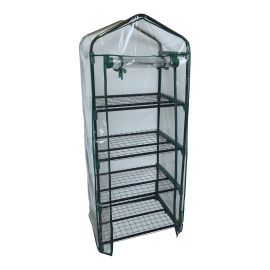
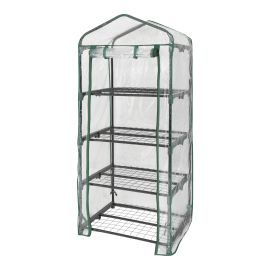 BOTAFLORAMini-Greenhouse – 4-Tier - Green - 23,6" x 17,7" x 57"$29.98
- In stock
- In-store pickup
- Truck delivery
- Add to Wish List
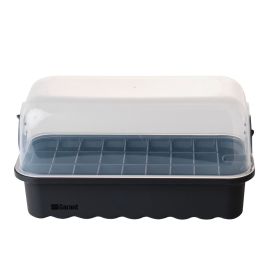 GARANTSeed Tray With Dome – Grey - 26 Cells$19.98
- Available online
- 7 to 10 day pickup
- Parcel delivery
- Add to Wish List
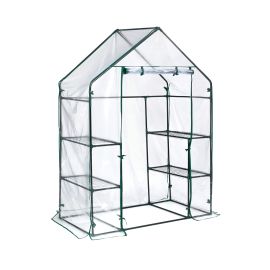 SHELTERLOGICGrow IT Small Greenhouse - 4'8" x 29" x 6'5"$64.95 $79.98
- In stock
- In-store pickup
- Truck delivery
- Add to Wish List
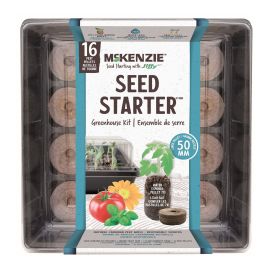 JIFFYJiffy Greenhouse Kit for Tomatoes and Vegetables - 18 Pieces$8.98
- In stock
- In-store pickup
- Parcel delivery
- Truck delivery
- Add to Wish List
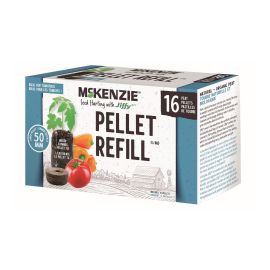 JIFFYJiffy Peat Pellets - Large - 50 mm - 16/Pkg$8.48
- In stock
- In-store pickup
- Parcel delivery
- Truck delivery
- Add to Wish List
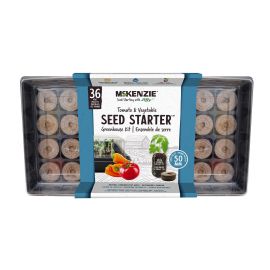 JIFFYJiffy Greenhouse Kit for Tomatoes and Vegetables - 38 Pieces$15.98
- In stock
- In-store pickup
- Parcel delivery
- Truck delivery
- Add to Wish List
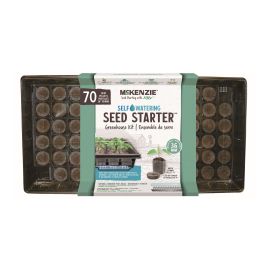 JIFFYJiffy Self-Watering Greenhouse Kit - 73 Pieces$15.95 $23.98
- In stock
- In-store pickup
- Parcel delivery
- Truck delivery
- Add to Wish List
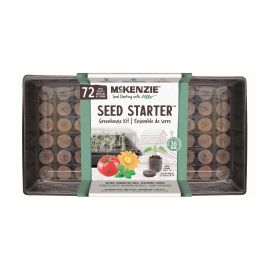 JIFFYJiffy Greenhouse Kit - 74 Pieces$15.98
- In stock
- In-store pickup
- Parcel delivery
- Truck delivery
- Add to Wish List
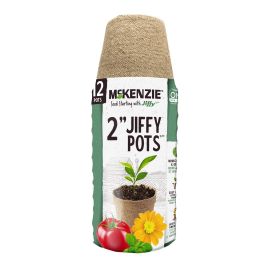 JIFFYJiffy Seeding Pots - 2" - 12/Pkg$3.48
- In stock
- In-store pickup
- Parcel delivery
- Truck delivery
- Add to Wish List
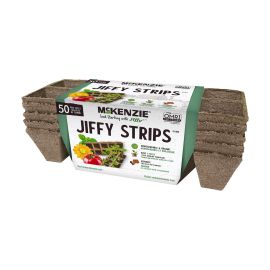 JIFFYJiffy Set of 5 Strips of 10 Peat Pots$4.98
- In stock
- In-store pickup
- Parcel delivery
- Truck delivery
- Add to Wish List
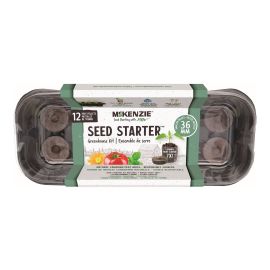 JIFFYJiffy Greenhouse Kit - 14 Pieces$3.98
- In stock
- In-store pickup
- Parcel delivery
- Truck delivery